







 English (Canada)
Natural rubber latex used to be the gold standard of medical glove materials. Today, the increasing prevalence of latex sensitivities and allergies among both patients and medical personnel has prompted a paradigm shift.
Latex reactions are not only more common than you think, they can also be more serious than expected. In fact, latex can cause life-threatening allergic reactions. 7, 8, 9
Moreover, due to increased exposure, healthcare workers are at greater risk of latex allergy. That’s why so many acute care facilities are choosing to go latex-free in their ORs, by using Medicom’s NEW polychloroprene and polyisoprene surgical glove product lines.
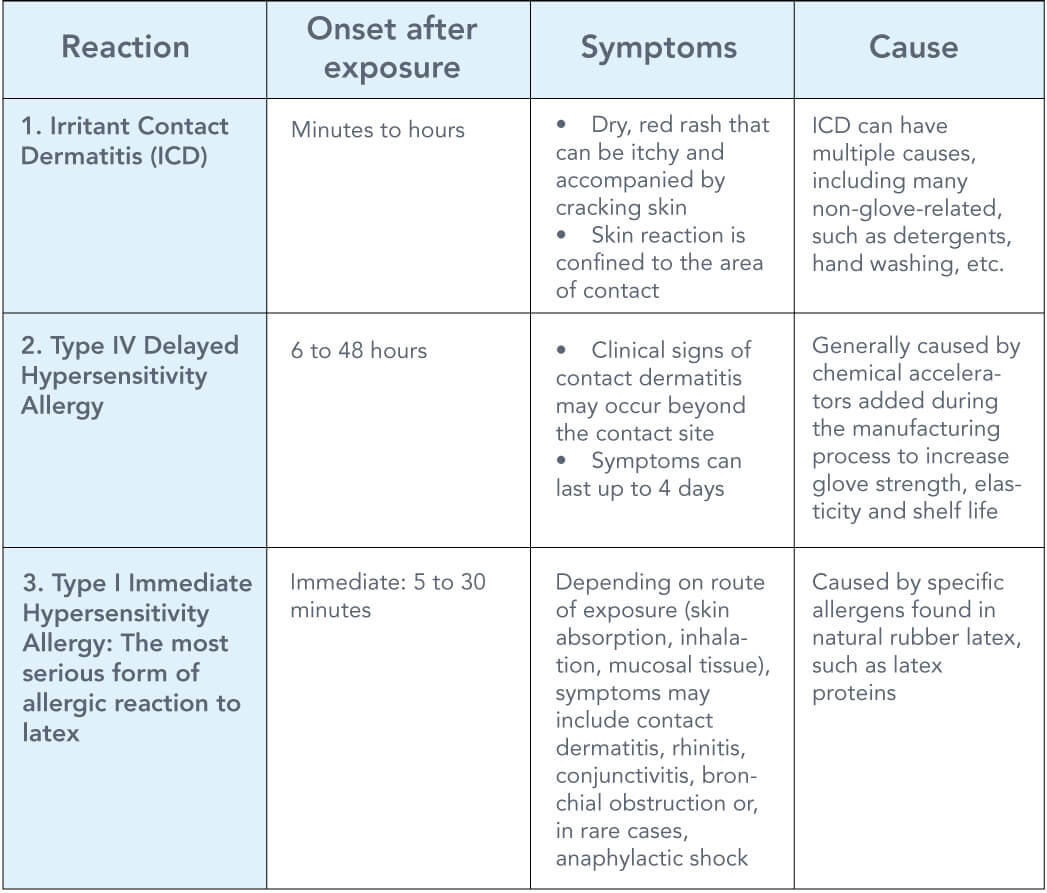
1. Irritant Contact Dermatitis (ICD)
2. Type IV Delayed Hypersensitivity Allergy
3. Type I Immediate Hypersensitivity Allergy
IMPORTANT: The chances of a serious allergic reaction increase with exposure. To minimize the chances of developing a latex allergy, it is best to avoid sensitization by:
Using latex-free gloves
Using gloves with low allergen levels
Washing hands after glove use
• High puncture resistance, good memory, very good • elasticity, but high modulus
• Excellent barrier against harsh chemicals
• Prevents Type I latex allergy
• Very strong, good puncture resistance (but tears
• easily once punctured)
• Excellent elasticity and memory, making it
• comfortable to wear for long periods
• Excellent resistance to chemicals
• Prevents Type I latex allergy - recommended for
• people with allergies and sensitive skin
• Mimics the performance of NRL; exhibits same
• characteristics
• Typically requires chemical accelerators for cross-
• linking; however, accelerator-free versions are
• becoming more available
• Traditionally a high-cost raw material, but
• economies of scale have reduced costs
• Weakest of the glove films, it is easily punctured by
• sharp objects, very susceptible to tearing, breakage
• and pin holes
• Not recommended for use with chemicals or
• chemotherapy drugs
• For use in low-risk situations where bloodborne
• pathogens are not present
As a result of increasing incidence and awareness of latex allergies and their potential danger, the medical industry is shifting to latex-free surgical gloves and reaping their many benefits, including:

safety






With experience in gloves and other personal protective equipment (PPE) spanning more than three and a half decades, we understand the unique challenges of running an OR and ensuring:
- Cost efficiency
- Clinical excellence
- Reliability
- Regulatory compliance
Making the shift is easy. Request a no-obligation trial of latex-free surgical gloves by Medicom.
REQUEST TRIAL

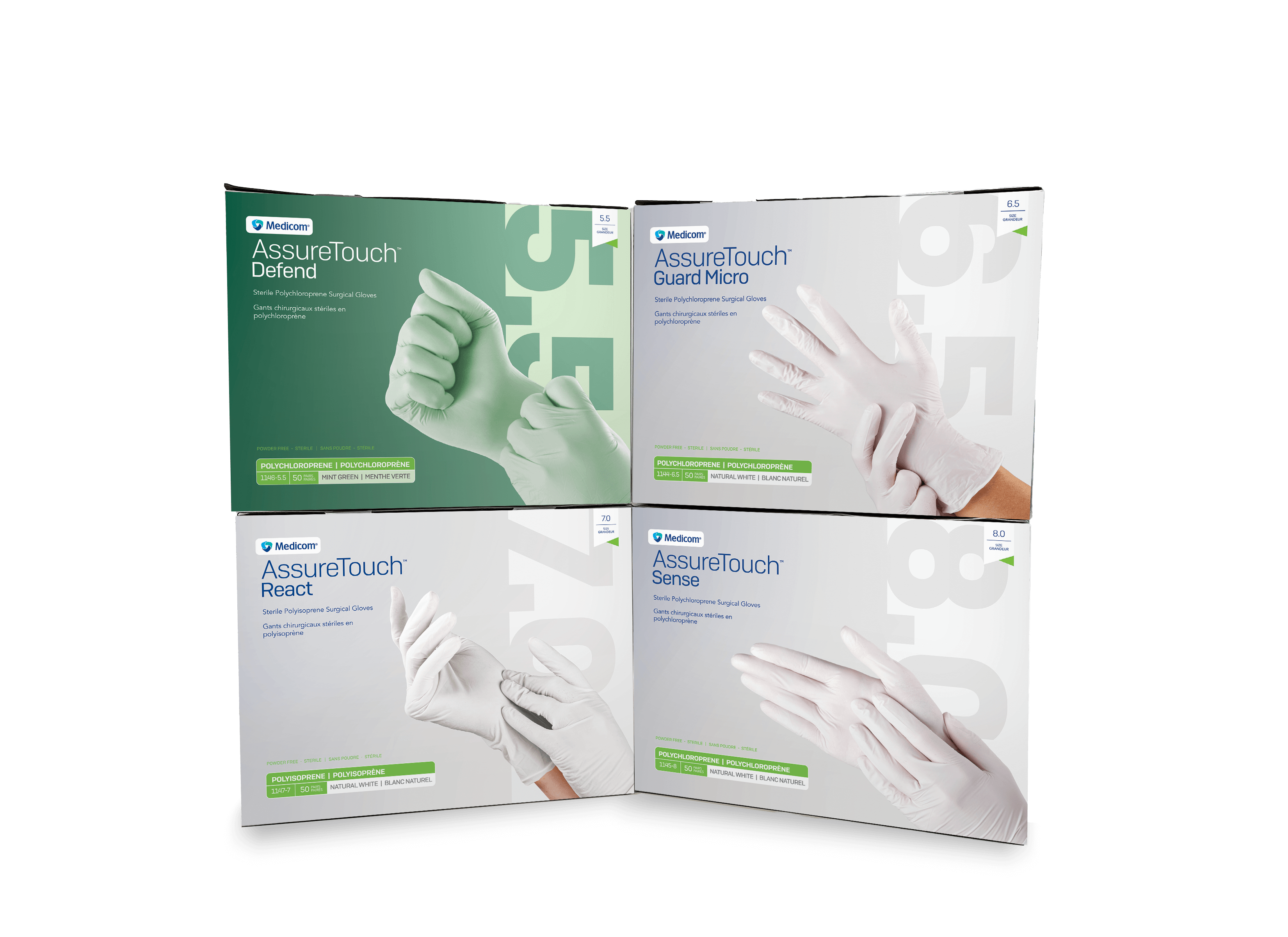
Made on ergonomically designed formers to help reduce hand fatigue, these durable, puncture-resistant gloves are available in white and green and in a range of palm thicknesses and sizes, so every member of your team will find their perfect pair.
Polychloroprene
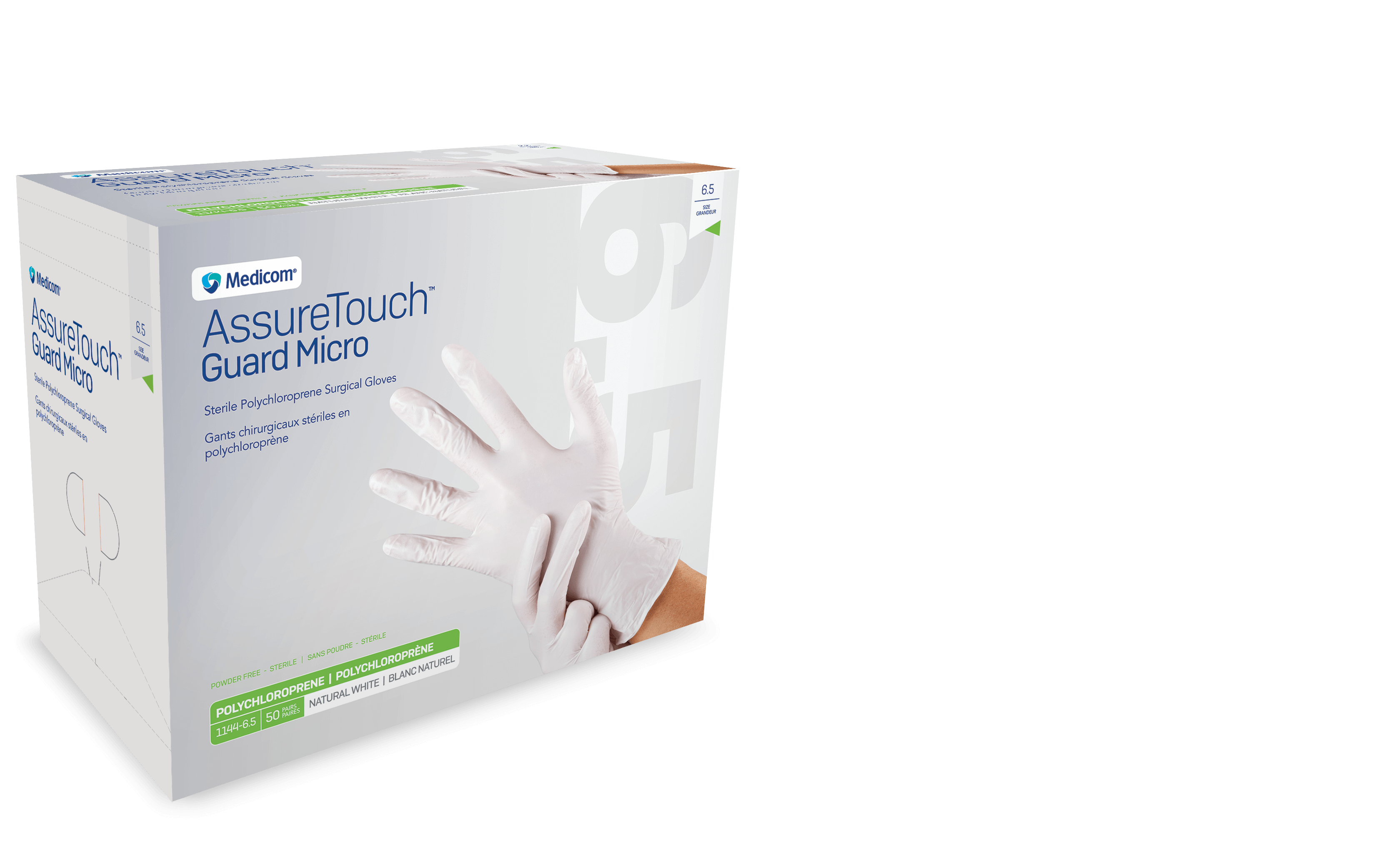
Color: Natural White
Weight: 9.8 g
Finger thickness: 0.13 mm/5.12 mil
Palm thickness: 0.11 mm/4.33 mil
Sizes: 5.5-9.0
Polychloroprene

Color: Natural White
Weight: 13 g
Finger thickness: 0.17 mm/6.69 mil
Palm thickness: 0.15 mm/5.91 mil
Sizes: 5.5-9.0
Polychloroprene

Color: Mint Green
Weight: 13.5 g
Finger thickness: 0.17 mm/6.69 mil
Palm thickness: 0.15 mm/5.91 mil
Sizes: 5.5-9.0
Polyisoprene
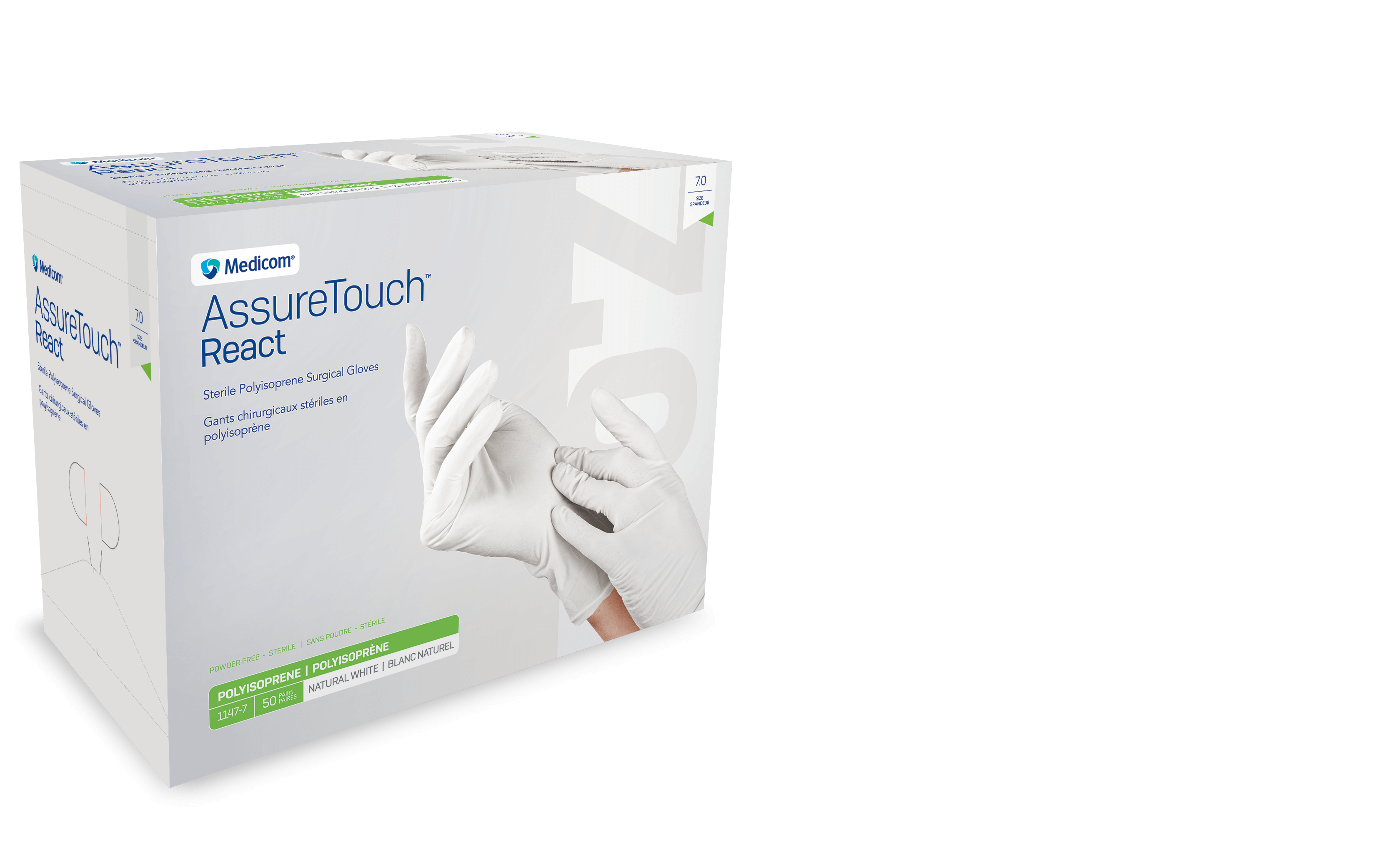
Color: Natural White
Weight: 11.9 g
Finger thickness: 0.18 mm/7.09 mil
Palm thickness: 0.17 mm/6.69 mil
Sizes: 5.5-9.0
Contact our experts today to learn how we can support your transition to latex-free surgical gloves. Together, let’s raise the bar on safety and performance in operating room practices.
Find the perfect pair of gloves for every member of your team and for every type of procedure. Explore our full glove portfolio: medicom.com/gloves
The complete portfolio of infection prevention and control solutions by Medicom also includes masks, gowns, wound care, sterilization products, and essential supplies. Visit medicom.com to learn more.
Request Trial
Fill in the form below to start your shift to Medicom AssureTouch latex-free surgical glove.
1. Charous BL, Hamilton RG, Yunginger JW. Occupational latex exposure: characteristics of contact and systemic reactions in 47 workers. J Allergy Clin Immunol 1994;94:12-8.
2. Liss GM, Sussman GL, Brown S, Cividino M, Siu S, Beezhold DH, et al. Latex allergy: epidemiological study of 1351 hospital workers. Occup Environ Med 1997;54:335-42.
3. Lagier F, Vervloet D, Lhermet I, Poyen D, Charpin D. Prevalence of latex allergy in operating room nurses. J Allergy Clin Immunol 1992;90:319-22.
4. Sussman GL, Liss GM, Deal K, Brown S, Cividino M, Siu S, et al. Incidence of latex sensitization among latex glove users. J Allergy Clin Immunol 1998;101:171-8.
5. Yassin MS, Lierl MB, Fischer TJ, O’Brien K, Cross J, Steinmetz C. Latex allergy in hospital employees. Ann Allergy 1994;72:245-9.
6. Yunginger JW. Latex allergy in the workplace: an overview of where we are. Ann Allergy Asthma Immunol 1999;83:630-3.
7. Guidelines for Best Practices for the Natural Rubber Latex Allergic and Meta Allergic Patient [Internet]. Littleton (CO): Association of Surgical Technologists; 2005 Oct [updated 2018 Apr 9, cited 2019 June 21]. 15 p. Available from: http://www.ast.org/uploadedFiles/Main_Site/Content/About_Us/Guideline_Latex_Allergy.pdf
8. Binkley HM, Schroyer T, Catalfano J. Latex allergies: a review of recognition, evaluation, management, prevention, education, and alternative product use. J Athl Train. 2003;38(2):133-40.
9. Kean T, McNally M. Latex hypersensitivity: a closer look at considerations for dentistry. J Can Den Assoc [Internet]. 2009 May [cited 2019 Jun 27];75(4):279-82. Available from: https://www.cda-adc.ca/jcda/vol-75/issue-4/279.pdf
